
Politics
Cracking the Pothole Puzzle: Navigating the Challenges of Repairing Britain’s Roads | Road Transport


The Pothole Problem in Bristol: A Closer Look at Marsh Street
A City’s Bumpy Reality
Marsh Street, nestled in the historic centre of Bristol, represents a microcosm of the larger issues facing Britain’s roadways. This modest stretch, approximately 200 meters long, is home to an office block at one end and a Thai restaurant at the other. However, what lies in between is a treacherous ride riddled with potholes and cracks that tell a story of neglect.
The road’s surface is a patchwork of pockmarks, with some areas revealing layers of road structure that have succumbed to time and weather. While cars and buses navigate this bumpy terrain, it’s especially daunting for cyclists, who must carefully weave through the obstacles of cracked tarmac.
A Bus Driver’s Perspective
Gary Gainey, a bus driver familiar with Bristol’s roads, does not mince words about the state of Marsh Street. He notes the absurdity of how badly damaged it is, reflecting his everyday experience as he steers large vehicles over its uneven surface. For drivers like him, heavy vehicles bouncing over these hollows can lead to physical strain, with colleagues sharing warnings about particularly bad spots on their routes.
It’s a precarious situation; during rush hour, a bus swerving to evade a pothole is not an option, especially with the flow of oncoming traffic. Gainey’s candid observations reveal a shared frustration among local drivers and residents about the city’s road conditions.
Is Marsh Street Bristol’s Worst Road?
In the local community, there’s ongoing debate about whether Marsh Street deserves the title of Bristol’s worst road for potholes. Online forums buzz with discussion, highlighting the collective consciousness surrounding this issue. While Bristolians express dismay at the state of their streets, it’s worth noting that they are not alone; potholes afflict many parts of the UK, which the government has termed a “pothole plague.”
According to the RAC, there are approximately one million potholes across Britain’s roads—about six per mile. This startling statistic underscores the gravity of the problem, as claims for pothole-related damages against local councils have spiked by 90% over three years.
Public Sentiment and Political Will
Remarkably, potholes have shifted from mere annoyances to major electoral concerns, taking precedence over topics like the cost of living and healthcare in recent polls. Voter anxiety about crumbling roads has intensified, as many perceive them as symbolic of broader societal decline.
In contrast, cities like New York are tackling these issues head-on, with Mayor Zohran Mamdani managing to repair 100,000 potholes in just his first 100 days—prompting the question: why can’t Britain resolve its pothole crisis?
Local versus National Responsibilities
Responsibility for road maintenance typically falls on local councils, often working within tight budgets influenced by national grant money. Recent government initiatives have offered some financial relief, with a pledge of £500 million specifically for highway maintenance. This funding comes with stipulations, demanding councils document their pothole-filling efforts—an attempt to hold local governments accountable yet further complicating their ability to focus on long-term solutions.
Political parties across the spectrum have latched onto the pothole debate as a key issue, with pledges ranging from Conservative “pothole patrols” to the Scottish National Party’s commitment to a £350 million fund aimed at improving road surfaces.
Budgetary Constraints and Long-Term Solutions
Many in local government argue that sweeping promises from above often lead to short-term fixes rather than comprehensive strategies. The experience of Shaun Taylor, Bristol’s head of highways, illustrates this struggle. He highlights a budget of £3 million this year while estimating a need of £9 million to truly address the root causes of the city’s pothole problems.
The focus on quick fixes like pothole filling is reactionary, merely masking underlying issues. As Taylor astutely compares it, neglecting road maintenance is akin to ignoring a deteriorating windowsill—it may look manageable now, but it leads to far greater problems down the line.
The Impact of Climate Change
The challenges of road maintenance are exacerbated by increasingly extreme weather patterns. As winters become colder and wetter due to climate change, the incidence of potholes is likely to escalate. Ed Plowden, a Green councillor, emphasizes that the rampant water erosion further contributes to the deterioration of road surfaces, making the problem more complex.
Funding Limitations and Future Outlook
Focus on immediate pothole repairs can hinder the development of a comprehensive strategy for road maintenance. Funding allocated on a year-to-year basis complicates long-term planning, pushing councils into a cycle of temporary repairs rather than fostering persistent improvements.
While funding from the Department for Transport aims to incentivize preventative measures, local councils often encounter barriers that prevent more holistic approaches to road maintenance. Issues like administrative pressures can limit their ability to fund broader infrastructure improvements, leaving communities frustrated with piecemeal solutions.
Addressing the Bigger Picture
Local authorities, like Bristol City Council, are pressing for more predictable and flexible funding that goes beyond the immediate needs dictated by pothole filling. The challenge remains clear: without a significant overhaul in funding and operational strategy, communities could face a gradual decline in road quality, leaving them navigating increasingly treacherous terrains.
The state of Marsh Street exemplifies a larger story thriving throughout the UK, calling for urgent attention and investment to ensure roads are not just treated, but fundamentally repaired for the long term.

Gloria Steinem: A Legacy of Activism and Change
Gloria Steinem, a co-founder of Ms. Magazine and a trailblazing figure in the women’s liberation movement, has passed away at the age of 92. The Gloria Steinem Foundation announced her death on social media, stating she “passed away peacefully at her home in New York City, surrounded by some of the many who loved her.” The cause of her death has not been disclosed.
Former U.S. Secretary of State Hillary Clinton remarked on Steinem’s profound impact on women’s equality, describing her as “one of the architects of the entire structure of women’s equality.” Clinton emphasized that Steinem’s activism was rooted in optimism, calling it a “moral choice” she made each day.
The Rise of Ms. Magazine
In 1971, Newsweek dubbed Steinem “The New Woman,” recognizing her pivotal role in advancing women’s rights. She co-founded Ms. Magazine, which was the first major publication owned, run, and written by women. Launched to raise awareness about social justice, media representation, and women’s issues at a time when feminism was gaining traction, Ms. quickly became a vital voice for women’s rights across the country.
Steinem’s journalistic lens challenged the notion that “women’s issues” were solely female concerns. She was a vocal advocate for including women’s voices in politics, actively promoting female candidates and fighting for voting rights. Her efforts emphasized the importance of civic participation and representation for women.
A Trailblazer for Women’s Issues
Steinem relentlessly pushed for economic and social justice for women and girls, focusing on reproductive freedom and safety from domestic violence. Her initiative, Take Our Daughters to Work Day, began as a program aimed at advancing workplace opportunities and quickly transformed into a worldwide movement, challenging traditional gender stereotypes.
Her experiences as a reporter shaped her activism. A pivotal moment occurred when she attended a gathering in the late 1960s where women shared personal stories about seeking illegal abortions. This forum of openness inspired her to question why such a significant issue was marginalized, further propelling her into the activism that would define her career.
Founding Ms. Magazine
Steinem’s conception of Ms. Magazine stemmed from her early career as a reporter for New York Magazine. Alongside activist Dorothy Pittman Hughes, she launched the first issue of Ms. on July 1, 1972. Its cover featured Wonder Woman and included a petition from women advocating for legal abortion. The publication arrived just before the historic Supreme Court decision in Roe v. Wade, which would secure abortion rights for women.
Katherine Spillar, an executive editor of Ms., noted that the magazine sparked conversations about myriad topics, including relationships, violence against women, and the evolving role of gender in society. Despite its success, Ms. faced criticism from both the right and left, illustrating the complex terrain of feminist discourse.
Controversies and Challenges
The publication faced numerous hurdles, including the challenge of attracting advertisers. It encountered backlash from both its conservative critics, who claimed it undermined “family values,” and progressive individuals who argued that its content lacked diversity. Nevertheless, Ms. persisted, garnering accolades and showcasing contributors like Angela Davis and Alice Walker.
Steinem once articulated that the term “feminism” could be both perplexing and alarming for many people. Nonetheless, she believed that the movement’s ideals resonated with broader society, citing the growing acceptance of gender equality.
The Evolution of Feminism
Born on March 25, 1934, in Toledo, Ohio, Steinem’s early life was marked by upheaval. Raised in various locations due to her family’s instability, she later moved to Washington, D.C., to live with her older sister after her parents divorced. Steinem graduated from Smith College and traveled to India on a scholarship, experiences that influenced her world view and activism.
Her journalism career began in earnest in New York City, where she wrote pieces that challenged societal norms. A groundbreaking undercover report from the Playboy Club exposed the pervasive sexual harassment experienced by women working in that environment, further solidifying her commitment to advocating for women’s rights.
Activism Beyond Ms.
In 1973, Steinem co-founded the Ms. Foundation for Women, which aimed to support grassroots initiatives and promote economic justice for women. Alongside her colleagues, she was instrumental in forming various organizations that advocated for civil rights, including the National Women’s Political Caucus and Voters for Choice.
Despite some skeptical views on the intersection of technology and women’s rights, Steinem asserted that true liberation comes from collective action and self-respect.
In her later years, Steinem continued to engage in activism and public speaking, solidifying her status as a vital figure in the feminist movement. She contributed to documentaries and was recognized with numerous awards, including the Presidential Medal of Freedom in 2013.
The Personal and the Political
Steinem’s personal life was often intertwined with her activism. After previously viewing marriage as detrimental to her independence, she married David Bale in 2000 when she was 66 years old. Reflecting on her relationship, Steinem noted that she finally felt secure enough in her identity not to lose herself in a partnership. Unfortunately, Bale’s death in 2003 marked a turning point in her life, shaping her understanding of grief and empowerment.
Gloria Steinem’s enduring legacy is a testament to her unwavering commitment to social justice, women’s equality, and the power of voice. Her work continues to inspire generations as the fight for equality persists in new and complex forms.
Politics
Italy Evaluates Outcomes as Giorgia Meloni’s Government Achieves Longevity Milestone :: WRAL.com

Giorgia Meloni: Italy’s Longest-Serving Premier and Her Path to Power
Introduction to Giorgia Meloni
In a nation known for its political volatility, Giorgia Meloni’s rise to power stands out. Taking office as Italy’s first female prime minister in October 2022, she has become a symbol of resilience and endurance in a landscape marked by frequent governmental turnover. As of now, Meloni’s government boasts a record of 1,413 consecutive days in power, surpassing the previous record held by Silvio Berlusconi.
A Historical Milestone
This remarkable milestone is set to be celebrated at a grand rally in Bari, emphasizing not only the political success of Meloni’s administration but also the symbolic weight of having a female leader at the helm of Italian politics. This unprecedented duration is noteworthy, as Italy’s tumultuous political history is characterized by short-lived governments, making Meloni’s ability to maintain stability a topic of discussion both domestically and abroad.
Balancing Act: Survival Skills Over Accomplishments
Meloni’s tenure has often been defined by her adept navigational skills rather than a robust record of legislative achievements. Experts suggest that the real test of her leadership will come when she faces voters. “If you have five years in office and not much to show when you go back to voters, it can weigh against you,” says Nathalie Tocci, an international relations expert.
From Outsider to Insider
Meloni governed from a position once viewed skeptically by European allies and financial markets. Her association with a party rooted in neo-fascism initially raised alarms. However, her pragmatic approach, including strong support for Ukraine post-invasion and active participation in European governance, has helped calm these concerns.
Coalition Stability: A Rare Feat
In recent European politics, governments have often crumbled under internal strife, but Meloni has kept her coalition intact. This unique stability within Italian politics is seen as a cornerstone of her strategy for reelection, as it offers her an edge in a landscape where governmental instability is commonplace.
Economic Policy and Achievements
Supporters of Meloni point to significant economic milestones achieved during her leadership. Under her watch, Italy saw the creation of over 1 million jobs, with unemployment figures dwindling below 6%. Her government has prioritized fiscal discipline, even rolling back costly measures to stabilize public finances. However, criticism persists regarding the long-standing issues of stagnant economic growth and inflation.
Critics and Challenges Ahead
While Meloni’s administration has enjoyed a period of stability, critics argue that substantive structural reforms have been overlooked. Political analysts like Lorenzo Pregliasco note that while the government is stable, it has not addressed critical areas such as healthcare and education effectively. Former Prime Minister Giuseppe Conte has pointedly remarked that while Meloni’s government celebrates its stability, everyday Italians continue to struggle with rising living costs.
Global Standing and Political Strategy
Internationally, Meloni’s tenure has reshaped Italy’s standing from being Europe’s ‘black sheep’ to a more credible player on the world stage. Her ability to balance relations with the U.S. while maintaining a strong national identity has garnered respect both at home and abroad. Her recent responses to diplomatic tensions highlight her assertiveness, further enhancing her image as a strong leader.
The Rise of Conservative Challengers
As Meloni’s administration leans towards moderation to maintain stability, it has opened the door for more hardline competitors within the conservative camp. Figures like retired General Roberto Vannacci are capitalizing on Meloni’s perceived moderation by launching their political agendas, posing challenges for her re-election strategy.
Nationalism and Governance
Meloni’s journey has also had implications for the broader political landscape in Europe. By successfully merging nationalist rhetoric with effective governance, she has accelerated the normalization of hard-right politics within European institutions. This balance demonstrates her approach: combining populism with governance in a way that appeals to various voter blocs.
This article captures the nuances of Giorgia Meloni’s political journey, illustrating her historical significance, her approach to governance, and the implications of her leadership for both Italy and Europe.
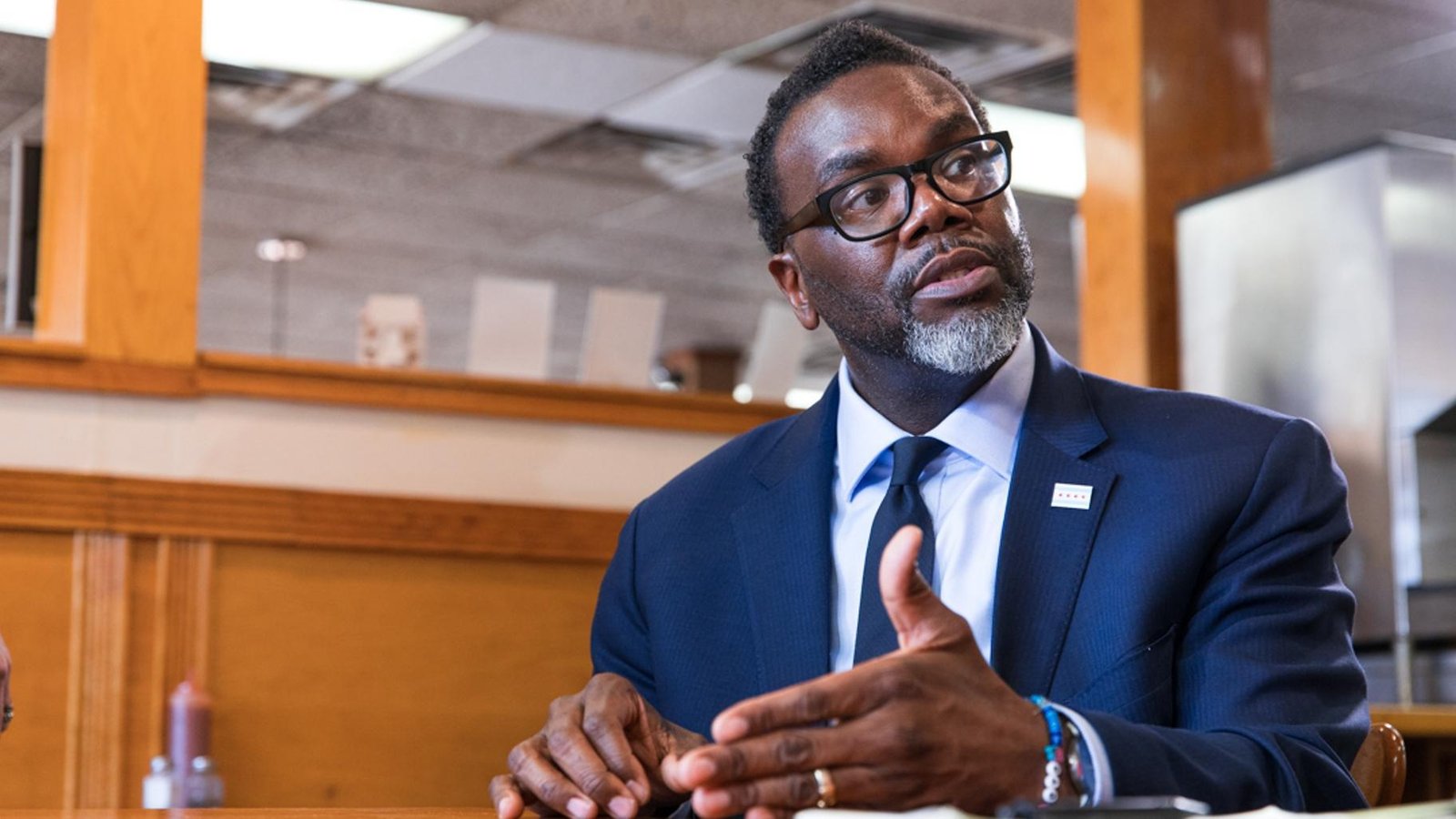
Who Is Running, or Thinking About Running, to Become Chicago’s Next Mayor
As the countdown to Chicago’s next mayoral election on February 23, 2027, begins, the list of candidates is expanding. With petitions for a spot on the ballot circulating since July 28 and due by late October, the political landscape is buzzing with potential contenders, each with their own vision for the city’s future.
The Incumbent
Brandon Johnson
Current Mayor Brandon Johnson has expressed his intention to serve multiple terms. However, he has yet to make a formal announcement regarding his reelection campaign for next year. Given his previous role as a Chicago Teachers Union organizer and Cook County commissioner, it would be unexpected for him to opt out of running for a second term.
The Current Field
Susana Mendoza
Current Job: Illinois State Comptroller
Mendoza officially entered the race on June 3, 2026. With a background as a former state legislator and Chicago city clerk, her campaign focuses on curbing City Hall spending and rebuilding trust between residents and the police. Mendoza previously ran for mayor in 2019, finishing fifth. She emphasizes a “listening tour” across Chicago to understand what residents truly need.
Mike Quigley
Current Job: U.S. Representative for Illinois’ 5th District
Quigley kicked off his campaign on June 27 at the Uptown Theatre. He has served in Congress since 2009 and aims to tackle budget issues and enhance public safety and education across Chicago’s neighborhoods. Quigley believes Chicago possesses all the ingredients needed for success but is hampered by financial mismanagement.
George Cardenas
Current Job: Cook County Board of Review Commissioner
Cardenas announced his candidacy on June 17, after nearly two decades in the Chicago City Council. His focus is on restoring fiscal discipline and reforming public safety strategies. He asserts that his extensive experience in public office gives him a significant advantage over the competition.
Matt Brewer
Current Job: Partner at Bartlit Beck law firm
Brewer entered the race on June 25, aiming to navigate the city’s evolving governance landscape. With a diverse professional background that includes co-ownership of iconic Chicago businesses, he advocates for addressing the complexities of the city’s leadership dynamics.
Joe Holberg
Current Job: Founder and CEO, Spring
Holberg kicked off his campaign last fall, becoming the first official candidate for the upcoming election. He prioritizes economic growth, debt elimination, and expanded housing options, drawing from his diverse experiences in both corporate and nonprofit sectors.
Lisa Nee
Current Job: Healthcare and Public Policy Advisor
Nee, a former cardiologist and whistleblower, launched her campaign on July 7, focusing on making Chicago affordable and enhancing public trust in leadership. Her unique journey from healthcare to politics provides her with distinct insights into the city’s needs.
Alexi Giannoulias
Current Job: Illinois Secretary of State
Giannoulias entered the mayoral race on August 2 while simultaneously running for another term as secretary of state. His platform includes aims for universal pre-K, increased minimum wage, and affordable housing expansion.
John Kelly
Current Job: Owner of All-Circo
Kelly, a veteran lobbyist, announced his candidacy on July 28, advocating for increased police presence to address crime and improving public safety measures.
Willie Wilson
Current Job: Founder, Omar Supplies, LLC
Making his fourth bid for mayor, Wilson focuses on public safety, education, and economic equality. His past attempts at various political offices add to his campaign experience.
Toni Brooks
Current Job: Caregiver
Brooks has an intricate background, having served in the U.S. Army National Guard. Her campaign emphasizes the importance of family caregiving and reallocation of funds to ensure that city resources effectively reach those in need.
Danielle Carter-Walters
Current Job: Co-founder, Chicago Flips Red
A Conservative voice in the race, Carter-Walters runs on a platform focused on reducing crime, improving education, and revitalizing Chicago’s business climate.
Zoe Ma
Current Job: Real Estate Developer
Ma, originally from China, emphasizes addressing inequalities and housing renovations. Her unique background informs her commitment to social equity and community improvement.
Jabari Taylor
Current Job: Health Policy Researcher, University of Illinois Chicago
Taylor aims to improve public housing and education pathways. He champions a future where families can afford to remain in Chicago, emphasizing community and institutional strength.
[Website not provided]
Potential Candidate
Maria Pappas
Current Job: Cook County Treasurer
Although Pappas hasn’t formally declared her intention to run, she has mentioned plans to enter the race after securing another term as treasurer. Her long tenure in finance positions her as a formidable candidate.
Dropped Out
Liam Stanton
Current Job: Founder and Principal, June Capital
Stanton ran a campaign that emphasized growth and community partnerships but dropped out on August 10, endorsing Giannoulias.
As the election date approaches, the competition intensifies. Each candidate brings diverse perspectives, backgrounds, and proposals to the forefront, reflecting the dynamic political landscape of Chicago.

7 Orca Encounters That’ll Brighten Your Day

“No, you’re not my daddy”?Funny Baby Reactions To Dads Shaving Beards ??

Funny Pitbull Dog Compilation NEW

Rat Murder Case | CID Puppykuttan Webseries Malayalam Comedy EP 32 | Puppy’s Short Film

Funny Cats and Cute Kittens Playing Compilation for laugh !

Celebrity Endorsement Deal, For Your Store, Product or Event Celebrity Endorsement Deal

Crazy Cockatoos! // Funny Animal Compilation

????? ??? Crow Sound Crow ki Awaz Loudly part 71 | Crow bird Fight for Food | Bird and Animal Sound

15 Ultimate Military And Police Dog Breeds in the World

Cute and Funny Blue Jay Behavior

Tyler Jaggers: Coast Guard Rescue Swimmer Passes Away Days After Mission Incident; Fiancée Honors His Memory

2026 NCAA Softball Tournament: Women’s College World Series Bracket, Schedule, and Scores

2026 NCAA Softball Tournament: Women’s College World Series Bracket, Schedule, and Scores

feeding carrot beans and radish to the hungry monkey

Who Is Really Voting in These Polls? The Shocking Truth Behind America’s Approval Numbers

Blueprint for a “Tax-Free America” That Actually Works

MS NOW Adjusts Schedule, Shifting Stephanie Ruhle and Alicia Menendez to Daytime Slots

Seattle Homicide Update: Suspect Still At Large After Stabbing Death of Transgender University of Washington Student in Laundry Room

The Transition of ‘Somebody Feed Phil’ to YouTube

Police Issue Warrant for Bar Patron Alleged to Have Assaulted Multiple Individuals
7 Orca Encounters That’ll Brighten Your Day
“No, you’re not my daddy”?Funny Baby Reactions To Dads Shaving Beards ??
Funny Pitbull Dog Compilation NEW
Rat Murder Case | CID Puppykuttan Webseries Malayalam Comedy EP 32 | Puppy’s Short Film
Funny Cats and Cute Kittens Playing Compilation for laugh !
Celebrity Endorsement Deal, For Your Store, Product or Event Celebrity Endorsement Deal
Crazy Cockatoos! // Funny Animal Compilation
????? ??? Crow Sound Crow ki Awaz Loudly part 71 | Crow bird Fight for Food | Bird and Animal Sound
15 Ultimate Military And Police Dog Breeds in the World
Cute and Funny Blue Jay Behavior
-

 Comedy2 weeks ago
The funniest and most hilarious ANIMAL videos #1 – Funny animal compilation – Watch & laugh!
-

 Comedy6 days ago
Emmanuel Don’t Do It – Emu Goes TikTok Viral for Messing With Caretaker’s Phone
-

 Celebrity clips2 weeks ago
Dogs Set House on FIRE while Filming an OLYMPIC Tiktok!
-

 Celebrity clips2 weeks ago
Best Talking Dog Videos (January 2023)
-

 Comedy1 week ago
? Funny and Cute Cockapoo ? Dogs and Puppies Tiktok Compilation
-

 Comedy2 weeks ago
Funny Hamster Compilation
-

 Comedy6 days ago
Goldendoodle — Adorable And Hilarious Videos And Tik Toks Compilation
-

 Comedy2 weeks ago
Best and funniest squirrel & chipmunk videos – Funny and cute animal compilation
