
Business
Magnificent 7 Update: Microsoft Soars as Apple and Alphabet Decline This Week

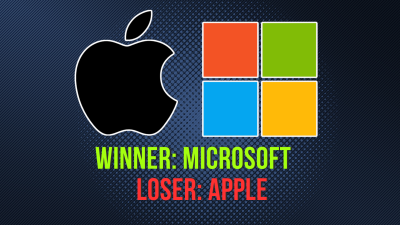
In the whirlwind of stock market activity, the latest week served as a stark reminder to investors of how rapidly the fortunes of the so-called “Magnificent 7” can shift. Factors such as AI optimism initially spurred market gains, but soon gave way to macroeconomic challenges, geopolitical tensions, and individual stock news that created a fragmented environment for investors.
During this tumultuous week, the S&P 500 plummeted by 1.98%, while the Nasdaq 100 saw a 1.24% decrease. This volatility was mirrored within the Magnificent 7: Microsoft experienced a noteworthy rise, while Apple faced a downturn. Alphabet suffered significantly, dropping 4.25%, with the other tech giants falling somewhere in between.
The VIX, often referred to as the fear gauge, spiked by 27.5% week-over-week, peaking at 23.75 by Thursday and entering a zone marked by heightened uncertainty. Navigating through market fears related to an evolving conflict in Iran mid-week, investors remained cautious about the ongoing scrutiny regarding AI capital expenditures. Additionally, Friday’s S&P 500 rebalancing, which added several AI-related stocks, added to the nervous climate.
This Week’s Biggest Winners and Losers in the Magnificent 7
| Ticker | Company | Feb 27 Close | Mar 6 Close | Weekly Return |
|---|---|---|---|---|
| MSFT | Microsoft | $392.74 | $408.96 | +4.13% |
| AMZN | Amazon | $210.00 | $213.21 | +1.53% |
| NVDA | NVIDIA | $177.19 | $177.82 | +0.36% |
| META | Meta | $648.18 | $644.86 | -0.51% |
| TSLA | Tesla | $402.51 | $396.73 | -1.44% |
| AAPL | Apple | $264.18 | $257.46 | -2.54% |
| GOOGL | Alphabet | $311.76 | $298.52 | -4.25% |
Broad Industry News
Mid-week, tensions surrounding the Iran conflict sent tremors through the markets, contributing to a surge in oil prices. This uptrend elevated the fear gauge and sparked a broad-based sell-off of stocks. By Friday’s closing, many investors appeared to be making fear-driven moves, retreating from equities deemed riskier. Notably, AI stocks like Lumentum and Bloom Energy faced sharp declines as trading intensified in the day’s final hours.
However, amidst the turmoil, there was a glimmer of approval for the AI sector. Friday night saw the S&P 500 concluding a crucial quarterly rebalancing, which introduced several AI infrastructure names such as Vertiv, Lumentum, Coherent, and EchoStar into the index. This highlighted the profound integration of AI into mainstream investment options and illustrated a shift in market dynamics.
Microsoft Leads the Pack on AI Narrative Shift
Perhaps the most encouraging news of the week came from Microsoft, which stood out as a clear winner. An analysis from Seeking Alpha characterized Microsoft’s hefty capital investments in AI as profit-boosting rather than margin-diminishing—a significant narrative shift compared to how the stock had been perceived post-earnings.
Adding to the momentum, Microsoft revealed new Cloud PC devices in collaboration with ASUS and Dell, set to launch by Q3 2026. These devices will boot directly into Windows 365 Cloud environments, cementing Microsoft’s commitment to cloud technology. Morningstar’s assessment of Microsoft also emerged as bullish, showcasing the company as resilient against potential disruptions from AI advancements.
Enthusiasm for Microsoft surged on platforms like Reddit, where a high-engagement post regarding a mid-week AI energy strategy meeting—including tech giants like Microsoft, Amazon, Google, Meta, and OpenAI—garnered immense interest, reflecting a positive shift in investor sentiment.
Alphabet Breaks Below $300 as CapEx Concerns and Legal Risks Pile Up
In stark contrast, Alphabet struggled significantly throughout the week. The stock fell below the critical support level of $300 amid broader market pressures stemming from a disappointing U.S. labor report affecting major tech stocks. Yet, Alphabet’s challenges ran deeper than external factors.
At the heart of investor concerns is the company’s capital expenditure. Alphabet’s forecast for CapEx in 2026, estimated to be in the range of $175-185 billion, is raising eyebrows. While the company continues to secure lucrative enterprise AI contracts, including a partnership with CVS for an AI-led healthcare initiative, these positives are unable to overshadow the pressures from broader economic instability and investor skepticism.
Legal hurdles compounded Alphabet’s woes, with mounting scrutiny surrounding various lawsuits and regulatory challenges, including a wrongful-death case tied to the Gemini chatbot and issues relating to Play Store commission settlements. Predictive market indicators show a mere 39.5% likelihood of Alphabet trading above $300 by March 9, although analysts remain generally optimistic, maintaining a price target around $366.57.
Apple Launches Seven Products, Stock Falls Anyway
Meanwhile, Apple made headlines by unveiling seven new products, including the much-anticipated MacBook Neo and iPhone 17e, each priced at $599. The MacBook Neo sparked excitement as it marks the first Mac to utilize an A-series chip, with analysts dubbing it “the most consequential product in a decade.” Additionally, Apple TV secured an exclusive Formula 1 deal, boosting sentiment in the services segment.
Despite this flurry of product launches, Apple’s stock fell by 2.54%. The disconnect between innovation and market performance appears rooted in valuation pressures and a general sell-off across the tech sector. Both UBS and Jefferies held steady with Neutral ratings on Apple’s stock, cautioning that current pricing already reflects expected future growth. Concerns about rising supply costs linked to memory chip shortages further contributed to the stock’s decline. Yet, Reddit discussions remain spirited, particularly regarding the $599 iPhone 17e, revealing a segment of retail investors maintaining a bullish outlook on Apple’s strategy.

Managing AI Token Costs: Insights for Business Finance Teams
AI technology is not just a trendy topic—it’s a crucial part of the operational framework in businesses today. Recent data indicates that AI token spending soared by 572% from June 2025 to June 2026. This rapid growth underscores the urgency for finance teams to adapt their budgeting and cost management strategies in response to the fast-moving nature of AI expenses.
The Complexity of AI Token Costs
Unpredictability Unveiled
Unlike traditional software costs that tend to be predictable—based on seats for SaaS or storage capacities for cloud solutions—AI token expenses present a different set of challenges. Token costs are influenced by various factors, including the model used, the length of prompts, and the volume of API calls. As such, month-to-month variations are substantial; data shows that the average business experiences swings of around 58% in AI spending.
The Multi-Vendor Landscape
Compounding this issue is the fact that businesses often utilize multiple AI vendors, with the median company engaging at least two different providers. Without a centralized view, finance teams are left interpreting multiple invoices without context, which complicates budget oversight. This lack of visibility can lead to significant financial surprises, particularly when businesses exceed $10,000 per month in AI spending—where AI becomes an official line item in budgets.
Layers of AI Cost Control
To effectively manage AI costs, businesses need to take action on two distinct layers: the engineering stack and the finance stack.
Engineering Stack Focus
Most current cost reduction strategies emphasize only the infrastructure layer, where tokens are generated. However, while infrastructure optimizations are essential, long-term cost control will only be viable when finance teams appreciate the overarching business implications of these expenses.
The Finance Layer
The finance layer requires comprehensive tracking and accountability systems that mirror the AI vendors’ billing mechanisms. Finance teams need to see token usage broken down by business unit, project, and model to hold teams accountable and pinpoint areas where optimizations can happen.
Predictable Cost Increasers
Understanding what drives unexpected AI token cost increases is vital for developing effective management practices.
1. Model Drift
Teams may begin with a cost-effective model intended for testing, only to upgrade to a premium model for production without adjusting budgets accordingly. This drift often goes unnoticed, leading to budget overruns.
2. Long-Context Inflation
Applications that require extensive document processing or detailed histories in requests can ramp up token consumption unexpectedly. Initial tests might not capture the full breadth of costs involved.
3. Multi-Model Sprawl
Without explicit policies governing which models should be employed for what tasks, teams often adopt multiple models that cumulatively raise costs, sometimes unapproved.
Strategies for Tracking AI Costs
To effectively manage AI expenses, finance teams should implement frameworks that provide granular visibility into costs.
Dimensions of Tracking
A comprehensive tracking framework should include:
-
Cost of Goods Sold vs. Operating Expenses: Differentiate between tokens used for customer-facing applications (COGS) and those utilized in internal operations (OpEx) to avoid skewed gross margins.
-
Team and Model Specificity: Establish unique spending targets for each team to foster accountability and incentivize monitoring.
-
Baseline and Historical Data: Use the past three months of spending to create informed budgets, which allows for accurate forecasting based on actual usage rather than merely industry averages.
Setting Sustainable AI Budgets
When establishing budgets for AI expenditures, it’s crucial to move beyond a one-size-fits-all approach.
Start with Baselines
Analyzing historical spending patterns can offer invaluable insights, allowing you to set realistic per-team budgets tailored to their respective workloads.
Team Targets
Provide each team with specific monthly AI budgets based on their historical spending and upcoming projects. This method drives awareness without being overly restrictive initially.
Pre-Scalability Cost Modeling
Whenever a new AI feature or application goes live, require an upfront cost model that projects expected token usage and potential growth scenarios, similar to practices in cloud infrastructure.
Cost Efficiency in AI Deployment
The disparity in spending between high and low-cost AI teams often stems from the strategies employed rather than the tools they use.
Prompt Caching
Utilizing prompt caching can substantially reduce costs for repetitive tasks. Cached prompts incur only a fraction of the standard rate upon subsequent calls, leading to significant savings over time.
Smart Model Usage
Not every request requires the highest-tier model. Deploying simpler, less expensive models for straightforward tasks can effectively manage costs while maintaining output quality.
Batch Processing
Amplifying your cost efficiency can also come from using asynchronous batch requests, which often receive discounted pricing for tasks where immediate responses are not critical.
Encouraging Optimization Tactics
These strategies create structures that foster both infrastructure optimizations and proactive financial oversight.
The Role of Finance in AI Cost Management
Finance plays a crucial role in cementing these cost control measures into the company’s culture.
Implementing Spend Limits
Setting monthly limits for each team’s AI budget provides a framework that necessitates strategic decision-making, encouraging teams to prioritize their workloads effectively.
Chargeback Models
Assigning AI spending back to the teams responsible for generating it creates a direct incentive to minimize waste, mirroring strategies successfully deployed in cloud cost management.
Anomaly Alerts
Automated alerts for sudden spikes in spending enable finance teams to intervene before small oversights blossom into significant budget crises.
As businesses increasingly rely on AI, implementing thoughtful practices around budget management will be crucial for sustainable growth and operational resilience in an ever-evolving digital landscape.
Google’s Antitrust Ruling: A Complex Landscape
In recent developments, Google finds itself navigating the turbulent waters of antitrust law after a federal court ruling revealed a mix of victories and challenges for the tech giant. On one hand, U.S. District Judge Leonie Brinkema confirmed that Google had indeed violated antitrust laws, yet in a surprising twist, she decided against breaking up its lucrative ad tech division.
The Judges’ Decision
On Wednesday, Judge Brinkema declined to endorse the Department of Justice’s (DOJ) proposals that aimed to divest key components of Google’s advertising technology. This included the Google Ad Exchange, commonly referred to as AdX, and the request to open-source the final auction logic of Double Click for Publishers. The DOJ argued that these tools allowed Google to maintain an unassailable monopoly in the ad tech sphere, severely hindering competition.
Despite acknowledging the violation of antitrust laws, Brinkema’s decision to reject structural remedies has drawn mixed reactions. “The Antitrust Division is pleased that the court ordered substantial relief in the Google Ad Tech case,” a DOJ spokesperson stated, emphasizing that they were still one step closer to restoring fair competition in online advertising markets.
Behind Closed Doors
The judge’s reasoning, articulated in a sealed memorandum, is expected to remain confidential for 14 days. This will allow for a period of reflection and potential negotiations between Google’s legal team and the DOJ. Both parties are set to confer within 30 days to file a “jointly proposed final judgment” that will encapsulate the decisions made while addressing any unresolved issues.
Google’s Vice President for Regulatory Affairs, Lee-Anne Mulholland, expressed relief that the court had opposed breaking apart tools vital for small businesses aiming to connect with customers. This sentiment reflects a broader theme of nurturing innovation and accessibility in the tech landscape.
Ongoing Trials and Implications
Historically, Judge Brinkema has overseen two significant trials related to Google’s monopoly behaviors. The first trial, which occurred in September 2024, led to a ruling in April 2025 that confirmed Google’s conduct had “substantially harmed” both its publisher clients and the competitive process within the digital advertising ecosystem.
As the case progresses into its remedies phase—most recently held in September 2025—both the DOJ and Google have presented competing proposals. However, Brinkema hinted during final arguments that an appeal from Google was likely. Such an appeal could delay any order requiring a divestiture, leaving the status quo largely unchanged for the foreseeable future.
The Shifting Ad Tech Landscape
In the background, the advertising technology space is evolving rapidly, influenced heavily by advancements in artificial intelligence. These shifts have led some rival companies, such as PubMatic, to pursue significant damages from Google. PubMatic filed a suit in 2025 seeking over $1 billion, alleging that Google’s monopolistic practices severely stifled its growth.
Simultaneously, regulatory bodies in Europe have not remained idle. Google faced a staggering $3.2 billion fine over allegations of manipulating its dominance in digital advertising technology, showcasing that the pressures from regulators are not confined to U.S. borders.
Broader Antitrust Struggles
This ruling isn’t an isolated incident in the ongoing scrutiny of Google’s operations. The tech giant has faced several antitrust challenges beyond its advertising segment. A recent ruling involved Google’s search engine practices, where again, the DOJ’s request to break apart the company was denied. This pattern reveals a judicial hesitation to fully dismantle a major player in the tech ecosystem, even while recognizing competitive harms.
As the antitrust landscape becomes increasingly complex, the ramifications of these rulings will resonate throughout the industry. Stakeholders, including smaller tech firms and regulatory bodies, are keenly observing how these legal battles will shape the future of digital advertising and technology in general.
Continuous Developments
With the possibility of further briefings or oral arguments looming, the outcome of this lengthy saga remains uncertain. Interested parties will be watching closely as the negotiations unfold, with the potential for significant changes on the horizon—changes that could alter the balance of power in the tech sector for years to come.
Business
DATELINE DIGEST: September 2 News Highlights, Business Updates, and Community Announcements

Dateline Digest for Sept. 2: News Briefs, Business Updates & Community Notes
Published 5:53 am Wednesday, September 2, 2026
By DDC Newsroom, editorial@daltoncitizen.com
Dalton Academy Graduate Recognized Among Georgia’s ‘Nineteen Under Nineteen’
DALTON — Gabriela Ruelas, a recent graduate of The Dalton Academy, has been honored as one of Junior Achievement of Georgia’s “Nineteen Under Nineteen.” This prestigious recognition highlights 19 students and recent graduates who exemplify leadership, innovation, and community involvement across the state.
Ruelas, who served as a 3DE by Junior Achievement ambassador, represented the program at various events over her four-year tenure. Her achievements include winning a case challenge during her freshman year and leading a consultancy team to victory as a senior. Additionally, Ruelas played a pivotal role as president of her school’s store and participated in a student-run coffee shop. Alongside her academic accomplishments as an AP Scholar and first-generation college student, she plans to pursue psychology at the University of West Georgia, aiming for a future as a psychometrist.
John Hancock, president and CEO of Junior Achievement of Georgia, praised the honorees, stating, “These 19 students reflect the extraordinary talent, determination, and potential found throughout Georgia.” Ruelas will receive a scholarship to assist her educational or entrepreneurial aspirations and will be acknowledged at the Junior Achievement Northwest Georgia Business Hall of Fame gala on March 4, 2027.
Proposals Sought for Court Resurfacing in Dalton
DALTON — The city of Dalton is currently inviting proposals for the repair and resurfacing of ten tennis and pickleball courts located at Lakeshore Park. The project includes essential crack repairs, surface preparation, and resurfacing, along with new striping for the courts. Interested contractors are reminded that sealed proposals must be submitted to the city Finance Department by 2 p.m. on September 16. Full bidding documents can be accessed at daltonga.gov.
TVFCU Celebrates One Year in Dalton
DALTON — The Tennessee Valley Federal Credit Union (TVFCU) recently marked the first anniversary of its Dalton branch, which stands as the North Georgia headquarters for the institution. Since opening its doors in 2025, the branch has successfully launched thousands of new accounts and processed over 13,000 transactions.
On August 18, community members celebrated the milestone with a festival featuring free snow cones from Kona Ice and opportunities to engage with local radio stations Mix 104.5 and Que Buena. Guests also had the chance to learn more about TVFCU’s financial products and services, which range from home and auto loans to checking and savings accounts. The Dalton branch manager, Teresa Lewallen, noted, “We are proud to bring the spirit of ‘people helping people’ to the Northwest Georgia communities our members call home.”
Free Liver Health Seminar by Hamilton Physician Group
DALTON — Hamilton Physician Group – Gastroenterology is hosting a complimentary lunch seminar focused on liver health at Hamilton University Base (1275 Elkwood Drive, Dalton) on September 11 from 12:30 to 1:30 p.m. Lunch will be provided to attendees.
This educational seminar will delve into metabolic dysfunction-associated steatotic liver disease (MASLD), previously known as fatty liver disease, along with its more severe counterpart, metabolic dysfunction-associated steatohepatitis (MASH). Key discussion points will cover understanding MASLD and MASH, dietary and lifestyle changes for managing the conditions, available treatment options, and steps to enhance liver health. For registration, participants can visit VitruvianHealth.com/event/lunch-learn or contact (706) 272-4127 for further inquiries.
HUD Revises Guidance on Fair Housing Act
WASHINGTON — The U.S. Department of Housing and Urban Development (HUD) has updated its guidelines regarding the statute of limitations for claims associated with the Fair Housing Act’s design and construction requirements. The new guidance aims to rectify previous interpretations that improperly placed liability on building owners for violations beyond their control, leading to increased housing costs.
HUD reported that the earlier guidance resulted in more than $110 million in repair expenses imposed on building owners over the past five years. This revision seeks to alleviate undue financial burdens while ensuring compliance with housing standards.

Boisterous Boston Terriers

Cats Attacking People Compilation ? | ? Funny Angry Cat Attack Videos

Husky The Drama Queen – Funny Animals 2023

? Funny Animals ? Farting

????????? ??????? ?????? ?????????? ????????????? ????????????? ? Fishing

No one in this world can love a girl more than her father – Cute Daddies and Babies daughter moments

Yuki The Giant Wolf Dog | BEAST BUDDIES

Super FUNNY DANCING & SINGING ANIMALS – WATCHING WITHOUT LAUGHING is NO OPTION HERE!

? TOP 5: ¡LOS PEQUEÑOS PECES DE AGUA FRÍA Que Deberías Tener en Tu Acuario!?? #aquarium #top5
![Funny Chinchilla ?Funny and Cute Chinchilla (Full) [Funny and Cute Pets]](https://wp.fifu.app/jacob.doptortech.com/aHR0cHM6Ly9pLnl0aW1nLmNvbS92aS9UbmE2VERkazJRby9tYXhyZXNkZWZhdWx0LmpwZw/5ce415c80284/funny-chinchilla-%f0%9f%90%adfunny-and-cute-chinchilla-full-funny-and-cute-pets.webp?w=80&h=80&c=1&p=15314 "Funny Chinchilla ?Funny and Cute Chinchilla (Full) [Funny and Cute Pets]")
Funny Chinchilla ?Funny and Cute Chinchilla (Full) [Funny and Cute Pets]

Tyler Jaggers: Coast Guard Rescue Swimmer Passes Away Days After Mission Incident; Fiancée Honors His Memory

2026 NCAA Softball Tournament: Women’s College World Series Bracket, Schedule, and Scores

2026 NCAA Softball Tournament: Women’s College World Series Bracket, Schedule, and Scores

feeding carrot beans and radish to the hungry monkey

Who Is Really Voting in These Polls? The Shocking Truth Behind America’s Approval Numbers

Blueprint for a “Tax-Free America” That Actually Works

MS NOW Adjusts Schedule, Shifting Stephanie Ruhle and Alicia Menendez to Daytime Slots

Seattle Homicide Update: Suspect Still At Large After Stabbing Death of Transgender University of Washington Student in Laundry Room

The Transition of ‘Somebody Feed Phil’ to YouTube

Police Issue Warrant for Bar Patron Alleged to Have Assaulted Multiple Individuals
Boisterous Boston Terriers
Cats Attacking People Compilation ? | ? Funny Angry Cat Attack Videos
Husky The Drama Queen – Funny Animals 2023
? Funny Animals ? Farting
????????? ??????? ?????? ?????????? ????????????? ????????????? ? Fishing
No one in this world can love a girl more than her father – Cute Daddies and Babies daughter moments
Yuki The Giant Wolf Dog | BEAST BUDDIES
Super FUNNY DANCING & SINGING ANIMALS – WATCHING WITHOUT LAUGHING is NO OPTION HERE!
? TOP 5: ¡LOS PEQUEÑOS PECES DE AGUA FRÍA Que Deberías Tener en Tu Acuario!?? #aquarium #top5
Funny Chinchilla ?Funny and Cute Chinchilla (Full) [Funny and Cute Pets]
-

 Comedy2 weeks ago
The funniest and most hilarious ANIMAL videos #1 – Funny animal compilation – Watch & laugh!
-

 Comedy1 week ago
Emmanuel Don’t Do It – Emu Goes TikTok Viral for Messing With Caretaker’s Phone
-

 Comedy1 week ago
? Funny and Cute Cockapoo ? Dogs and Puppies Tiktok Compilation
-

 Comedy2 weeks ago
Funny Hamster Compilation
-

 Comedy1 week ago
Goldendoodle — Adorable And Hilarious Videos And Tik Toks Compilation
-

 Comedy2 weeks ago
Belgian Malinois — Majestic And Hilarious Videos And Tik Toks Compilation
-

 Celebrity clips2 weeks ago
Bite Club! Protection Training With Hulk’s Son Vader | DOG DYNASTY
-

 Comedy7 days ago
Funny Cat Paper Cup Challenge!
