
Finance
Indian Railway Finance Corporation Ltd Reaches Intraday Low

Intraday Performance and Price Movement
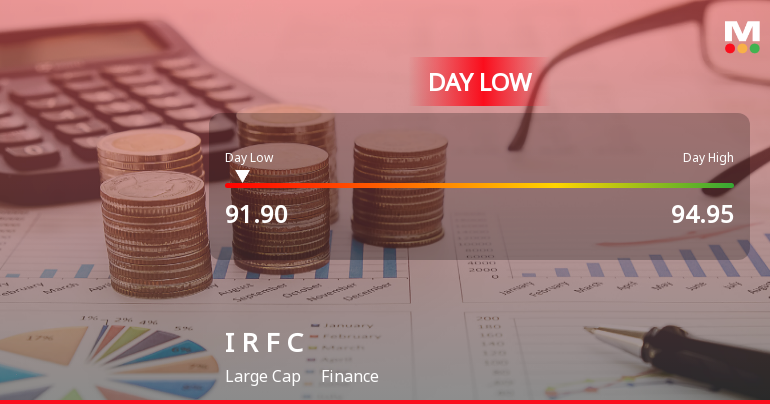
In today’s trading session, the share price of Indian Railway Finance Corporation (IRFC) experienced a significant drop, hitting a low of Rs 91.9. This decline marked an intraday decrease of 3.47%, with the stock eventually closing down 3.15% at Rs 92.3. This movement follows a brief rally of two consecutive days of gains, prompting concerns of a potential reversal in short-term momentum. Close to the company’s 52-week low, currently just 3.52% above Rs 89.15, the stock reflects ongoing bearish pressure that investors are closely monitoring.
The downturn in IRFC shares contrasts sharply with the broader trends in the Finance/NBFC sector, which recorded a decline of 2.91%. Notably, the overall market was affected as well; the Sensex fell sharply to close at 73,667.94, down 2.13%. This drop followed an opening that saw the index fall by 389.66 points, culminating in a dramatic intraday dip of 1,215.85 points. Currently, the Sensex sits 3.04% above its own 52-week low of 71,425.01, implying a broadly cautious environment across the market.
Technical Indicators and Moving Averages
From a technical standpoint, IRFC finds itself trading below all significant moving averages—namely the 5-day, 20-day, 50-day, 100-day, and 200-day averages. This positioning is a clear indication of sustained bearish momentum across various timeframes. The daily moving averages corroborate the negative trend, further validating the stock’s recent price behavior.
Moreover, additional technical assessments reaffirm this bearish outlook. The Moving Average Convergence Divergence (MACD) is bearish on a weekly scale and mildly bearish monthly. Meanwhile, the Bollinger Bands indicate mild bearishness on a weekly basis and a more pronounced bearish stance on a monthly basis. The KST (Know Sure Thing) indicator also reflects weekly bearish trends and a mildly bearish stance monthly. Dow Theory assessments echo this sentiment, highlighting mild bearishness over both weekly and monthly periods. Lastly, the On-Balance Volume (OBV) metric shows a mild bearish sentiment across both the weekly and monthly charts, accentuating ongoing concerns among traders.
Comparative Performance Analysis
When comparing performance, IRFC has consistently lagged behind the Sensex over various time horizons. A one-day decline of 3.15% outstrips the Sensex’s drop of 2.13%. For a week, the stock decreased by 2.64%, while the Sensex fell by only 1.16%. Notably, over the month, the divergence becomes even sharper, with IRFC down 10.96% compared to a 9.37% drop for the Sensex.
Looking at longer-term trends provides further clarity to IRFC’s performance challenges. Over three months, the stock saw a dramatic decline of 30.94%, which is more than double the Sensex’s fall of 13.37%. On a one-year trajectory, IRFC’s decline of 25.88% starkly contrasts with the Sensex’s more moderate 5.07% decrease. Year-to-date figures are also telling; IRFC is down 26.00%, nearly twice the Sensex’s 13.55% decline. Yet, it’s worth noting that IRFC’s three-year and five-year returns are significantly better than the Sensex, showing gains of 255.16% and 300.00%, respectively, in stark contrast to the Sensex’s growth of 27.78% and 50.32%. However, when looking at a decade-long view, IRFC’s performance has been flat, significantly lagging behind the Sensex’s impressive 190.76% growth.
Sector and Market Sentiment
The Finance sector, particularly Non-Banking Financial Companies (NBFCs), has faced notable pressure today, paralleling the 2.91% decline mentioned earlier. This sectoral weakness is clearly reflected in IRFC’s stock price movements. The broader market sentiment remains cautious, particularly with the Sensex trading below its 50-day moving average, which is itself positioned beneath the 200-day average—a conventional sign of a bearish market trend.
The risk-off sentiment among market participants is apparent through the Sensex’s substantial downturn and IRFC’s intraday low. A significant factor contributing to this price pressure is the stock’s downgrade from a Hold to a Sell rating on 11 August 2025, alongside a Mojo Score of 34.0 and a Mojo Grade of Sell. Although classified as a large-cap stock within the finance sector, IRFC is currently navigating a challenging phase, burdened by both technical and fundamental headwinds.
Summary of Current Market Dynamics
In conclusion, IRFC’s current intraday low of Rs 91.9 and closing price of Rs 92.3 signify a continuation of recent bearish trends amid a generally negative market backdrop. The stock’s technical indicators and moving averages articulate sustained bearish momentum, while its relative underperformance against both the Sensex and sector peers emphasizes ongoing price pressures.
The declines within the Finance sector and the Sensex today contribute to a cautious market sentiment, exerting further pressure on IRFC’s share price. The recent downgrade and current Mojo Grade of Sell pose additional challenges for the stock at this time. Investors and market watchers remain keenly aware of its proximity to the 52-week low and the stock’s underperformance relative to key moving averages—both of which serve as alarming indicators of prevailing weaknesses.
Limited Period Only. Get Started for only Rs. 16,999 – Get MojoOne for 2 Years + 1 Year Absolutely FREE! (72% Off) Get 72% Off ?
Jet2’s Surge in Summer Bookings and Strategic Stock Move
Strong Summer Performance
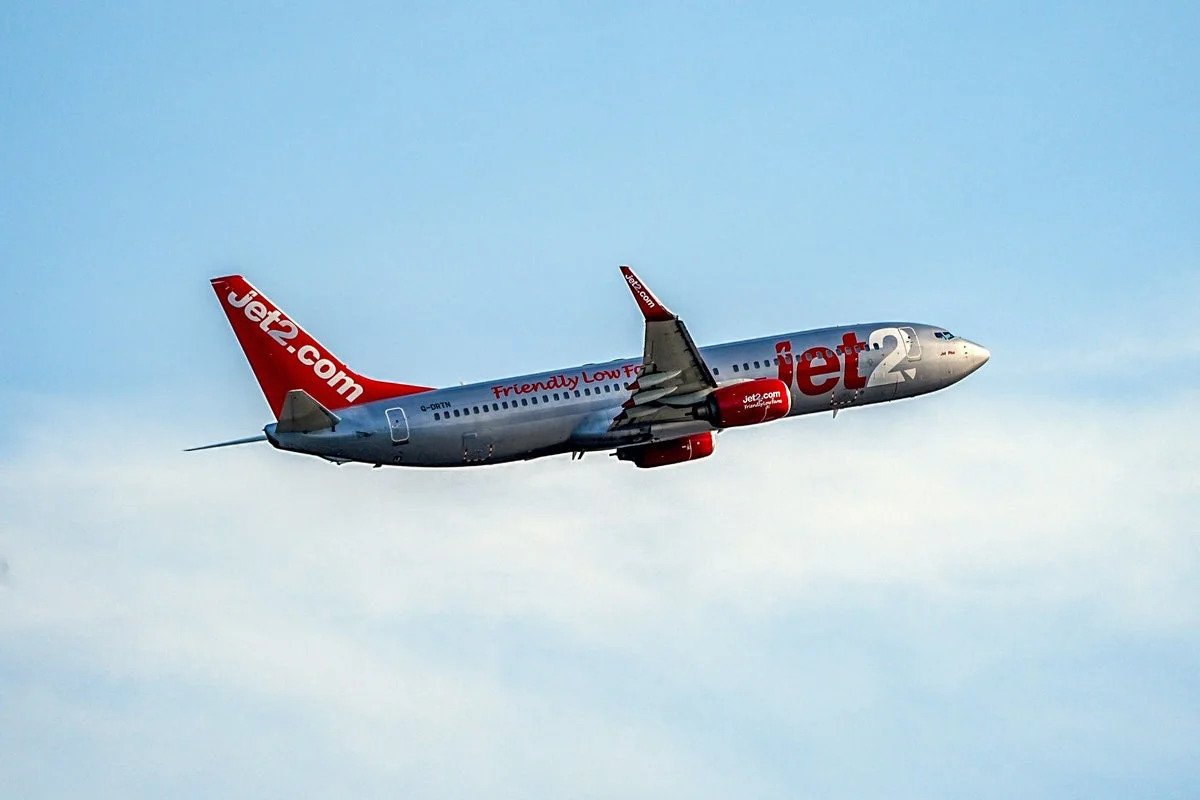
Jet2, the UK’s leading package holiday provider and third-largest airline, has reported a significant increase in summer bookings for 2026 compared to last year. The company stated that passenger bookings have surged by 8.8%, an encouraging indication that traveler confidence is on the rise. This uptick spans both package holidays and flight-only deals, showcasing Jet2’s robust market position and consumer demand for travel.
Load Factor Insight
In addition to the rise in bookings, Jet2 revealed that its load factor—a critical metric for airlines representing the average percentage of occupied seats on flights—has improved by 1.5 percentage points compared to last summer. This metric not only reflects the airline’s operational efficiency but also indicates a growing appetite for travel among consumers.
Winter Capacity Expansion
Looking forward to the winter season of 2026-27, Jet2 is ramping up its seat capacity by 8%, totaling approximately 5.9 million seats. This expansion follows notable growth at London Gatwick Airport, indicating the airline’s strategic approach to meet the expected demand. The decision to increase capacity is a proactive measure to ensure that Jet2 can accommodate travelers eager for winter getaways.
Changing Booking Trends
A noteworthy trend emerging from Jet2’s operational strategy is the growing tendency of consumers to book trips closer to their travel dates. This shift has been particularly prominent in the wake of global events, including volatility due to the war in Iran and accompanying travel disruptions. Jet2 aims to adapt to this evolving landscape, ensuring flexibility for customers while maintaining profitability.
Fuel Cost Hedge
Despite the challenges posed by sporadic jet fuel supply shortages, Jet2 has effectively hedged against rising fuel costs for the current financial year. This strategic move provides the airline with cost certainty, allowing it to maintain competitive pricing in a fluctuating market.
Leadership Perspectives on Demand
Steve Heapy, Jet2’s CEO, expressed optimism about the sustained demand for the airline’s holiday products throughout the peak summer season. His confidence extends to the outlook for the remainder of the financial year, bolstered by positive trends in consumer behavior and market performance.
Strategic Market Positioning
In a significant development, Jet2 is planning to transition its stock market listing from the Alternative Investment Market (AIM) to the main market of the London Stock Exchange. This move signifies a graduation from a growth market to a broader platform, potentially attracting a wider range of institutional investors, both in the UK and internationally.
Business Growth and Future Opportunities
Heapy highlighted that this strategic stock move represents not only the growth of Jet2 but also its proven track record of operational success and the myriad opportunities that lie ahead. The transition to the main market is expected to enhance the company’s visibility and credibility across a more extensive investment community.
Market Analysts Weigh In
Adam Vettese, a market analyst at Etoro, described the transition to the main market as a vital signal of Jet2’s evolution. He noted that the company has outgrown AIM in nearly every aspect except its ticker symbol. With this move, Jet2 is positioning itself for greater scale, liquidity, and a more extensive institutional following. Membership in the FTSE 250 index emerges as a conceivable objective, outlining the company’s ambition for future growth.
Summary of the Current Landscape
Overall, Jet2’s recent updates paint a picture of a company navigating market challenges while capitalizing on growth opportunities. The combination of increased summer bookings, expanded winter capacity, strategic financial maneuvers, and market positioning reflects a strong outlook for the airline as it continues to adapt to the dynamic travel landscape.

What Happened: A Closer Look at Broadcom’s Stock Decline
Broadcom (AVGO) faced a significant decline in its stock price, dropping approximately 4% in after-hours trading on Wednesday. This shift has sparked discussions among analysts and investors regarding the underlying causes and implications for the company going forward.
Behind the Drop: Forecasts and Expectations
The primary reason for this downturn appears to be Broadcom’s revenue forecast for the current quarter, which the company projected at $34.8 billion. This figure falls short of the $35.05 billion consensus anticipated by analysts, as reported by Bloomberg. The shortfall in expectations is especially concerning given the intense competition in the technology sector, where high performance is crucial to maintain investor confidence.
Analysts Weigh In
Cody Acree, an analyst at StoneX, remarked on the market response, indicating, “I can understand the selling pressure.” He highlighted that while Broadcom’s fiscal Q3 performance did show some positive metrics, including a revenue and earnings beat, it was ultimately not compelling enough to satisfy investors. The modest growth in earnings and revenue, coupled with the company’s reliance on the fast-evolving AI sector, doesn’t seem to provide the robust outlook investors were hoping for.
Earnings Report Insights
In terms of performance, Broadcom reported adjusted earnings per share (EPS) of $3.32, surpassing Wall Street’s expectations of $3.23. The company’s quarterly revenue experienced remarkable growth, climbing 86% year-over-year to reach $29.6 billion, also exceeding expectations that hovered around $29.45 billion. These impressive numbers reveal the company’s capability to deliver strong financial results, yet the market reactions suggest that expectations were set exceptionally high, particularly among investors eyeing AI advancements.
The AI Surge
Broadcom has largely benefited from a surge in demand as tech giants pivot towards developing custom silicon and enhancing their data center capabilities. CEO Hock Tan emphasized this trend in his earnings release, stating, “Demand for our custom AI accelerators and networking continues to be very strong.” The increasing adoption of AI technology has undoubtedly provided a boost to Broadcom’s revenue streams, particularly in the AI semiconductor market, which saw a staggering year-over-year growth of 221% and a sequential growth of 54% this past quarter.
Year-to-Date Performance
Despite the recent stock dip, Broadcom’s performance remains comparatively stable, with a 6% increase year-to-date, especially when juxtaposed with the strong performance of peers like Nvidia (NVDA), which saw a 20% rise. This relative stability might suggest that, while immediate forecasts have caused ripples, the long-term growth trajectory for Broadcom remains promising, particularly due to its solid foothold in the AI ecosystem.
Strategic Positioning
Cody Acree further noted, “Broadcom is really just second only to Nvidia as far as its ecosystem across the data center.” This positioning indicates that despite the fluctuations in stock performance, Broadcom’s strategic alignment within the tech sector could prove advantageous in the future. Understanding when to enter the market or position investments may be crucial for discerning investors looking to capitalize on potential rebounds.
With ongoing developments in the technology landscape, particularly in AI and networking, Broadcom remains a company to watch. Its ability to navigate market expectations and deliver on its capabilities will play a significant role in determining its stock performance in the coming quarters.

Filecoin Surges Amid Network Upgrade Buzz
In a recent twist in the ever-evolving landscape of cryptocurrencies, Filecoin has jumped a remarkable 15.41%, reaching a trading price of $0.7962. This leap can be largely attributed to burgeoning discussions surrounding potential network upgrades, capturing the keen interest of investors. Coincidentally, this surge positions Filecoin at the forefront of crypto gainers, highlighting the volatility—and opportunity—that often characterize the cryptocurrency market.
The Driving Force: Anticipated Network Upgrades
The primary catalyst for Filecoin’s price movement seems to be speculation about anticipated upgrades to its network. Investors often react positively to potential improvements in blockchain technology, as these enhancements can lead to increased efficiency, scalability, and security. Network upgrades generally position digital assets for better performance in the competitive blockchain landscape, and Filecoin appears to be aligning its strategy to capitalize on this opportunity. The excitement surrounding these upgrades has undeniably sparked investor interest, leading to renewed enthusiasm for Filecoin.
A Look at Other Gainers
Filecoin wasn’t the only token to benefit from the ongoing buzz in the market. Other decentralized finance (DeFi) tokens also made notable strides. Uniswap, for instance, has continued to show resilience and growth, benefiting from its strong position in the decentralized exchange landscape. Similarly, Curve DAO has attracted attention for its innovative liquidity solutions, while rising assets like Ethena and Sky further reflect the ongoing investor enthusiasm for blockchain technology. The collective movements of these tokens underline a broader trend within the DeFi space, suggesting that investors are increasingly optimistic about the future of decentralized applications.
The Shadow of Market Volatility
While Filecoin and its peers celebrate their gains, the crypto market remains characteristically volatile. Not every token has shared in the positive sentiment; some, like Flare and Canton, have experienced declines. These discrepancies paint a picture of a market that is highly selective, driven not only by innovation but also by investor sentiment and external factors. Tokens that fail to align with current trends or address critical user needs can experience rapid fluctuations in value, underscoring the importance of staying informed and vigilant.
Eyeing Bitcoin and Macroeconomic Indicators
As the crypto community watches the developments around Filecoin and the DeFi sector, attention is also shifting to Bitcoin’s movements and upcoming macroeconomic data. Bitcoin, often viewed as a bellwether for the entire cryptocurrency market, tends to set the tone for trader sentiment. Analysts and enthusiasts alike are keen to gauge any shifts in Bitcoin’s price, as its performance could have a cascading effect on the broader market.
Additionally, macroeconomic indicators, including inflation rates, interest rates, and employment data, can play a pivotal role in shaping market trends. Investors are on the lookout for signs that may hint at the overall health of the economy and, consequently, the stability of the cryptocurrency sector.
Potential for Future Trends
The current dynamics of the crypto market showcase a blend of opportunity and risk. As Filecoin leads the charge with its surge fueled by network upgrade discussions, the performances of other tokens are a reminder of the inherent volatility present in this space. Investors are urged to conduct thorough research and maintain a diversified portfolio to navigate the unpredictable nature of cryptocurrency investments successfully.
Ultimately, the blend of technological advancements and market sentiment will likely dictate the trajectory of Filecoin and its contemporaries in the coming weeks. With each new development, the excitement in the cryptocurrency world continues to build, keeping investors and enthusiasts engaged and on their toes.

Cats Attacking People Compilation ? | ? Funny Angry Cat Attack Videos

Husky The Drama Queen – Funny Animals 2023

? Funny Animals ? Farting

????????? ??????? ?????? ?????????? ????????????? ????????????? ? Fishing

No one in this world can love a girl more than her father – Cute Daddies and Babies daughter moments

Yuki The Giant Wolf Dog | BEAST BUDDIES

Super FUNNY DANCING & SINGING ANIMALS – WATCHING WITHOUT LAUGHING is NO OPTION HERE!

? TOP 5: ¡LOS PEQUEÑOS PECES DE AGUA FRÍA Que Deberías Tener en Tu Acuario!?? #aquarium #top5
![Funny Chinchilla ?Funny and Cute Chinchilla (Full) [Funny and Cute Pets]](https://wp.fifu.app/jacob.doptortech.com/aHR0cHM6Ly9pLnl0aW1nLmNvbS92aS9UbmE2VERkazJRby9tYXhyZXNkZWZhdWx0LmpwZw/5ce415c80284/funny-chinchilla-%f0%9f%90%adfunny-and-cute-chinchilla-full-funny-and-cute-pets.webp?w=80&h=80&c=1&p=15314 "Funny Chinchilla ?Funny and Cute Chinchilla (Full) [Funny and Cute Pets]")
Funny Chinchilla ?Funny and Cute Chinchilla (Full) [Funny and Cute Pets]

Ep 38: The Wiener Dog HEIST Movie!

Tyler Jaggers: Coast Guard Rescue Swimmer Passes Away Days After Mission Incident; Fiancée Honors His Memory

2026 NCAA Softball Tournament: Women’s College World Series Bracket, Schedule, and Scores

2026 NCAA Softball Tournament: Women’s College World Series Bracket, Schedule, and Scores

feeding carrot beans and radish to the hungry monkey

Who Is Really Voting in These Polls? The Shocking Truth Behind America’s Approval Numbers

Blueprint for a “Tax-Free America” That Actually Works

MS NOW Adjusts Schedule, Shifting Stephanie Ruhle and Alicia Menendez to Daytime Slots

Seattle Homicide Update: Suspect Still At Large After Stabbing Death of Transgender University of Washington Student in Laundry Room

The Transition of ‘Somebody Feed Phil’ to YouTube

Police Issue Warrant for Bar Patron Alleged to Have Assaulted Multiple Individuals
Cats Attacking People Compilation ? | ? Funny Angry Cat Attack Videos
Husky The Drama Queen – Funny Animals 2023
? Funny Animals ? Farting
????????? ??????? ?????? ?????????? ????????????? ????????????? ? Fishing
No one in this world can love a girl more than her father – Cute Daddies and Babies daughter moments
Yuki The Giant Wolf Dog | BEAST BUDDIES
Super FUNNY DANCING & SINGING ANIMALS – WATCHING WITHOUT LAUGHING is NO OPTION HERE!
? TOP 5: ¡LOS PEQUEÑOS PECES DE AGUA FRÍA Que Deberías Tener en Tu Acuario!?? #aquarium #top5
Funny Chinchilla ?Funny and Cute Chinchilla (Full) [Funny and Cute Pets]
Ep 38: The Wiener Dog HEIST Movie!
-

 Comedy2 weeks ago
The funniest and most hilarious ANIMAL videos #1 – Funny animal compilation – Watch & laugh!
-

 Comedy1 week ago
Emmanuel Don’t Do It – Emu Goes TikTok Viral for Messing With Caretaker’s Phone
-

 Celebrity clips2 weeks ago
Dogs Set House on FIRE while Filming an OLYMPIC Tiktok!
-

 Comedy1 week ago
Goldendoodle — Adorable And Hilarious Videos And Tik Toks Compilation
-

 Comedy1 week ago
? Funny and Cute Cockapoo ? Dogs and Puppies Tiktok Compilation
-

 Comedy2 weeks ago
Funny Hamster Compilation
-

 Comedy2 weeks ago
Belgian Malinois — Majestic And Hilarious Videos And Tik Toks Compilation
-

 Celebrity clips2 weeks ago
Bite Club! Protection Training With Hulk’s Son Vader | DOG DYNASTY
